Chapter 3 - Holiday Haikus
IN THIS LESSON
How to create Halloween haikus with a thematic twist!
Engineer your Haikuverse prompts to create an unforgettable thematic twist
The secret to a great Halloween Haikuverse image isn't just adding pumpkins; it's about twisting the familiar into something delightfully strange. We're not just making spooky scenes; we're giving classic monsters day jobs and turning autumn traditions upside down.
Step 1. Frame the Canvas (with a Halloween Twist)
Start with a classic format, but corrupt it with a spooky style anchor. Don't just say "cartoon," say "haunted 1930s rubber-hose cartoon." Don't just say "painting," say "ectoplasmic oil painting on cracked canvas."
Style Mash-ups: "Tim Burton + Norman Rockwell," "Gory manga + vintage candy wrapper art," "Gothic architecture + neon-drenched cyberpunk."
Step 2. Invert the Trope
Take a classic Halloween expectation and flip it on its head. The goal is surprise. What's the last thing you'd expect this character to be doing?
Don't say: “A scary scarecrow in a field.”
Say: “A terrified scarecrow running for its life from a laughing murder of crows.”
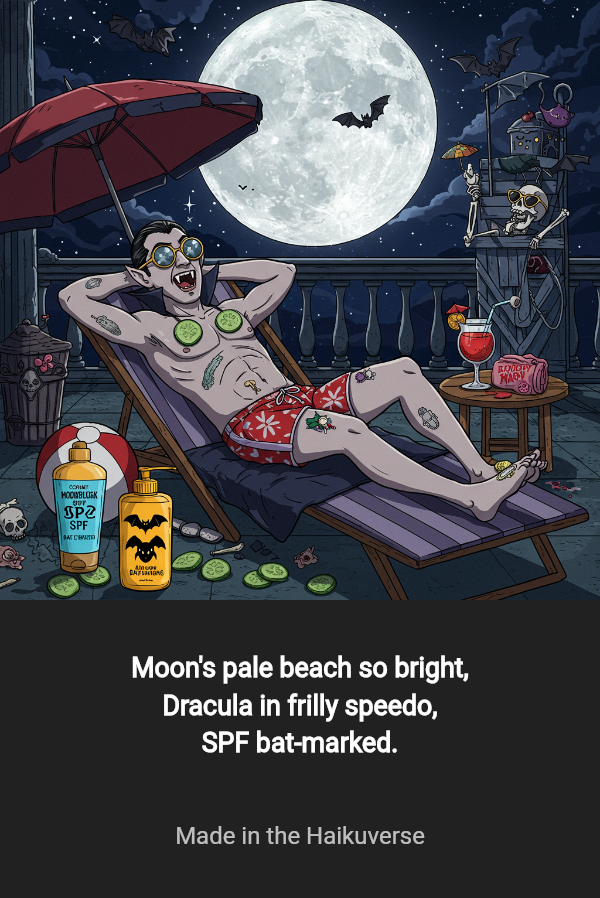
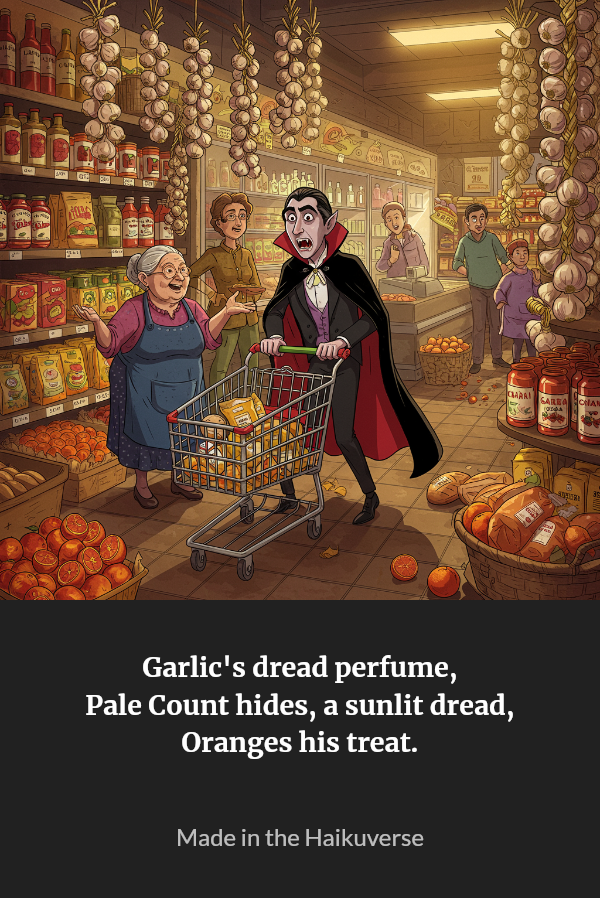
Examples: Dracula relaxing on a moon-drenched beach with "Moonblock SPF 50." A werewolf patiently filing his taxes. A ghost trying to return a haunted toaster to the store.
Step 3. Make Monsters Mundane
Ground your ghouls in painfully normal, everyday situations. The contrast between the supernatural creature and the boring task is where the comedy lives.
Don't say: “A zombie walking through a graveyard.”
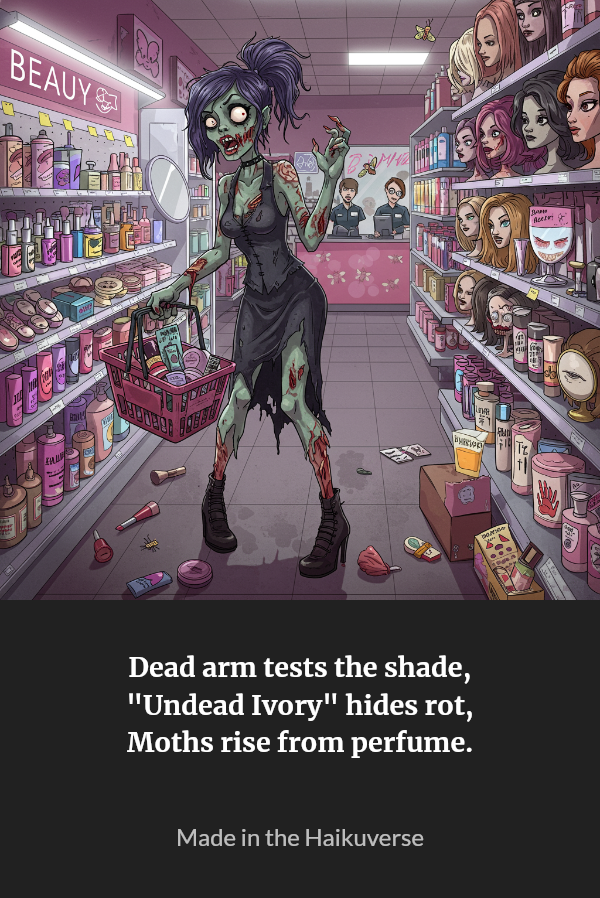
Say: “A zombie in a fluorescent-lit beauty aisle, agonizing over the perfect foundation shade, like 'Undead Ivory'.”
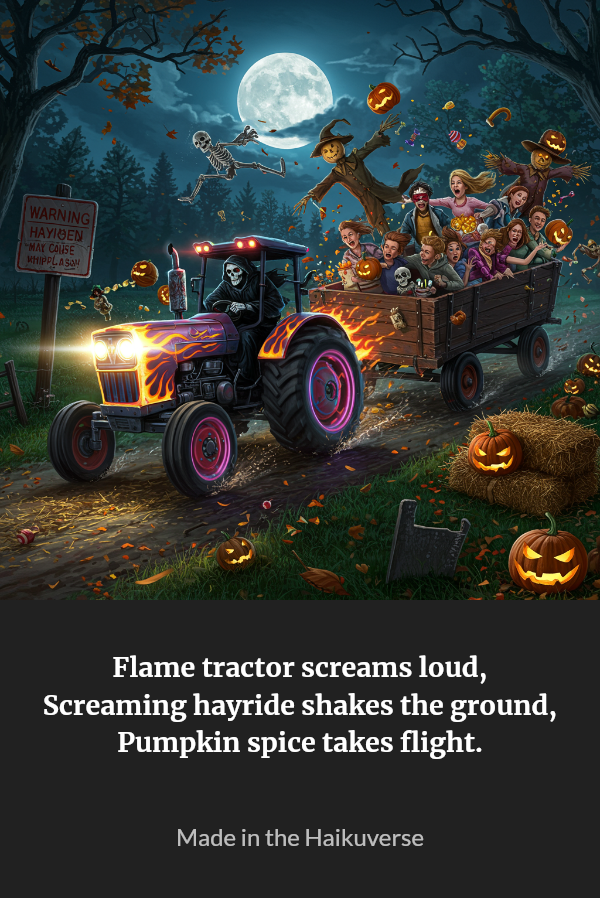
Examples: Frankenstein's monster struggling with IKEA instructions. The Grim Reaper driving a souped-up tractor for a hayride. A mummy getting tangled in toilet paper at the supermarket.
Step 4. Weaponize the Palette
Your colors should tell a story. Be specific and thematic. Don't just list colors; describe their Halloween essence.
Use 5-6 key tones: "Pumpkin-gut orange," "cadaver green," "witching-hour purple," "candy-corn yellow," "congealed blood-red," and "cobweb gray."
Think like a confectioner of nightmares. Your palette is your box of cursed crayons.
Step 5. Light It Like a Horror Film
Atmosphere is everything. Use lighting to sell the mood, whether it's funny, creepy, or both. Steal techniques from classic horror.
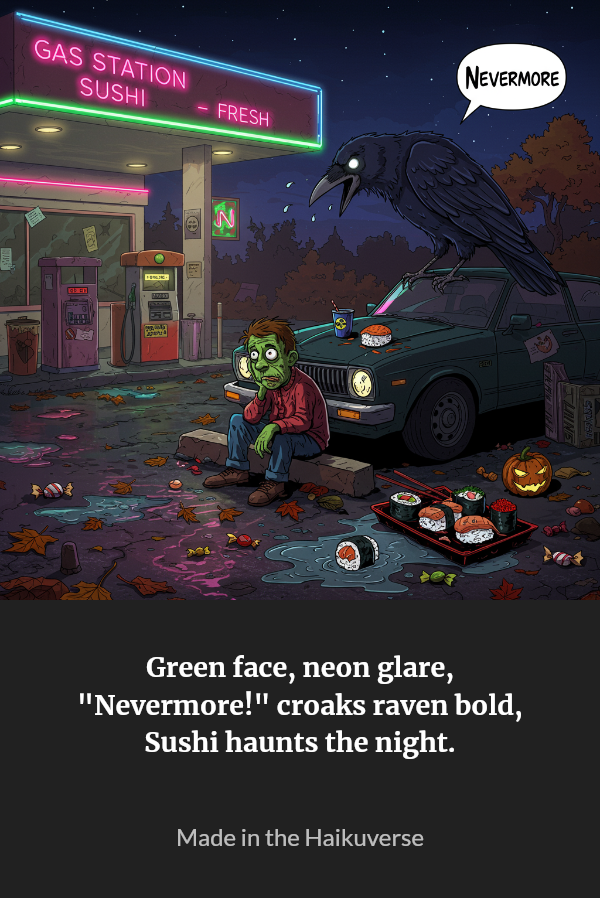
Instead of "dark," say: "Flickering jack-o'-lantern light," "creepy gas station neon glare," "harsh flashlight beam cutting through thick fog," or "dramatic full-moon backlighting that makes silhouettes sharp and menacing."
Step 6. Scatter Thematic Easter Eggs
The background is your playground for inside jokes and spooky details. These small touches make the world feel alive (or undead).
Examples: A discarded "Specially Made" blood bag on a side table. A roadside sign that says "WARNING: HAYRIDE MAY CAUSE WHIPLASH!" A single bat wing floating in a cocktail. A raven quoting Edgar Allan Poe at a lonely zombie.
Step 7. The Signature Spooky Flourish
This is your final, absurd twist. The one detail that pushes the scene from clever to unforgettable Haikuverse genius.
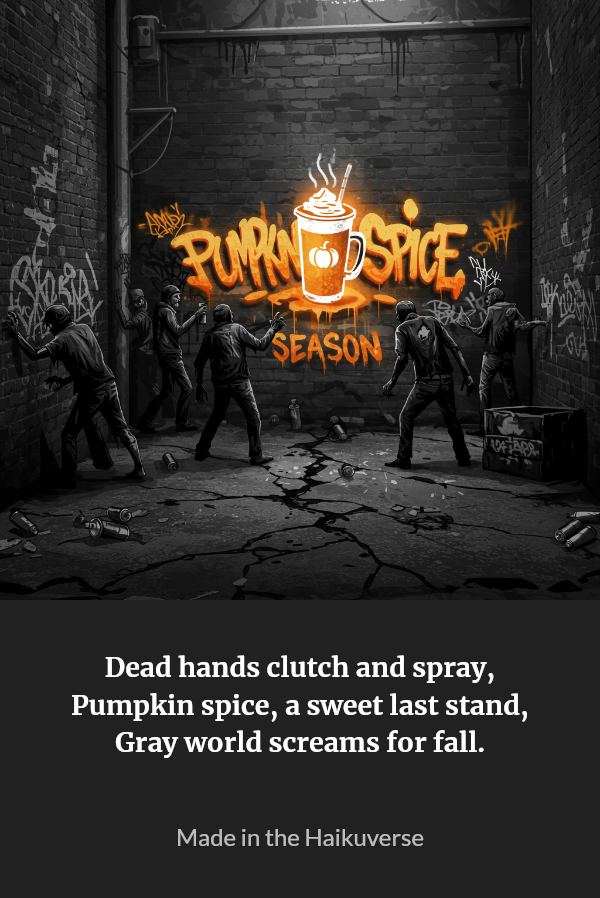
Examples: Moths made of dust and sorrow rising from a perfume bottle. Skeletons flying through the air like festive debris. A gang of street toughs spray-painting a tribute to Pumpkin Spice.
Now go make something delightfully dreadful!
-
Featured Haikuverse Content Creator